
Process Automation in Banking
KYC as a Practical Use Case
Introduction
Banks are under growing pressure. Regulatory requirements are increasing, customer expectations continue to rise, and operational efficiency has become a strategic priority. As a result, many institutions are rethinking how core processes are designed and executed.
Highly structured, rules-based processes are particularly well suited to end-to-end automation. One of the most relevant examples is Know Your Customer (KYC). In many banks, KYC is still shaped by manual reviews, fragmented handoffs, and limited transparency across the process chain.
A recent project at a bank shows how KYC can be automated from end to end using modern workflow technology, creating greater transparency, stronger control, and measurable efficiency gains. KYC is just one example, but the underlying principles can be applied to many other banking processes as well.
KYC for Corporate Clients:
What the Process Involves
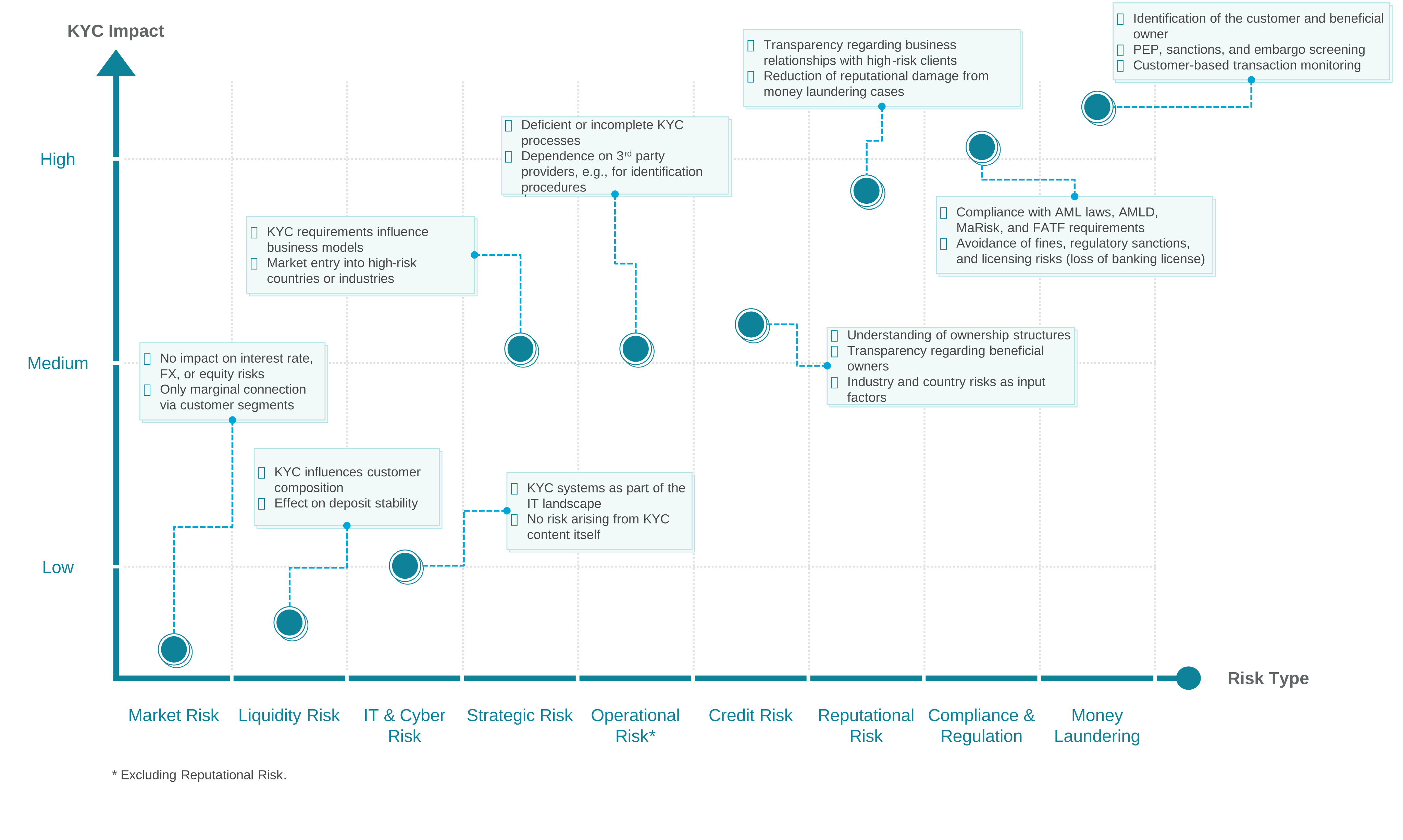
A typical KYC process for corporate clients includes:
- blacklist and sanctions screening
- identification and verification of managing directors
- validation of data and documents, such as commercial register extracts and articles of association
- Foreign Account Tax Compliance Act (FATCA) and Common Reporting Standard (CRS) checks for tax compliance
- risk assessment, including country risk, industry risk, and screening results
- onboarding or rejection decisions for new clients, and retain or offboarding decisions for existing clients
In many institutions, however, these steps are only loosely connected. Manual intervention is common, which increases turnaround times, raises the risk of errors, and makes end-to-end traceability difficult.
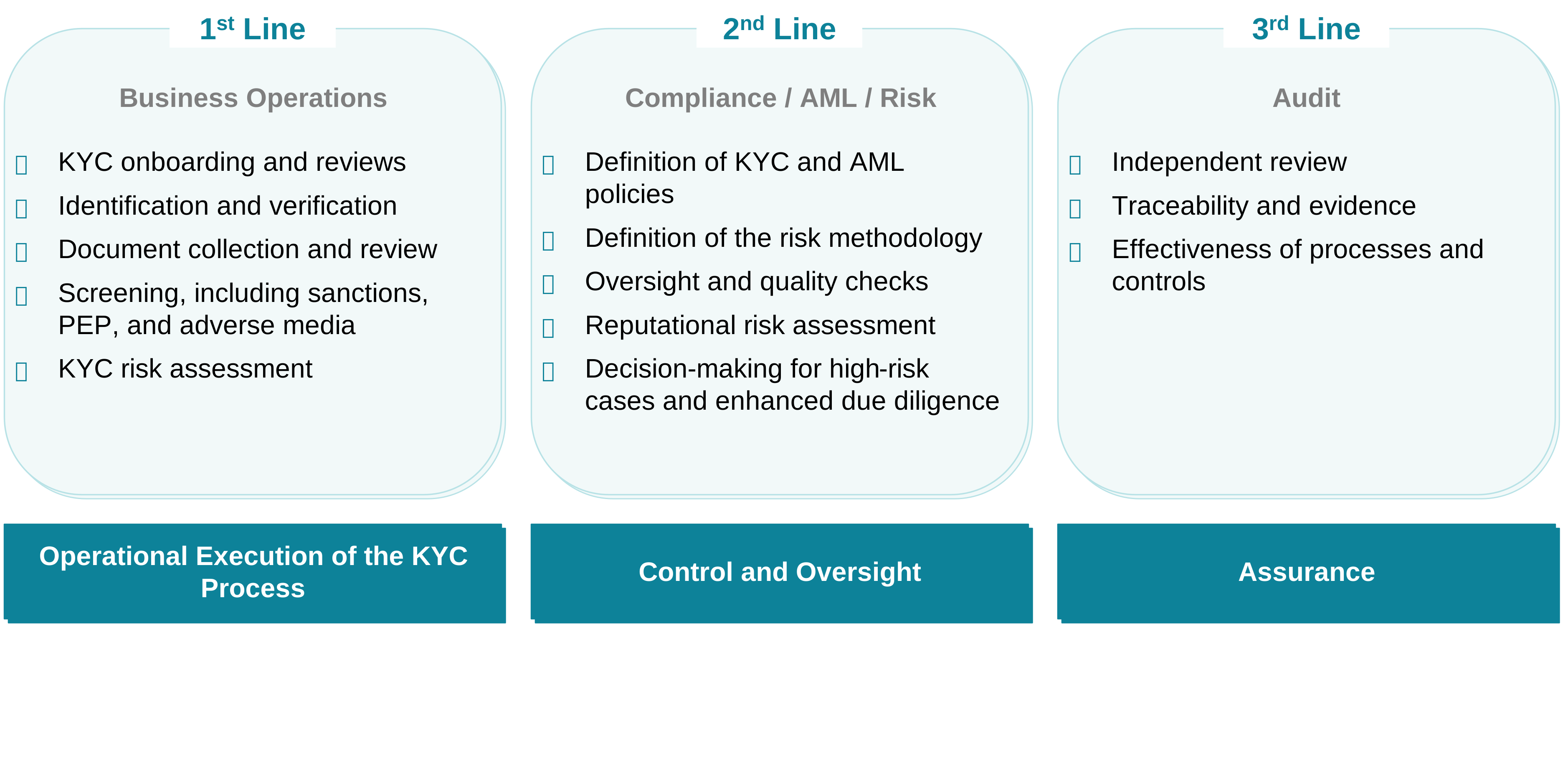
The following diagram outlines the Three Lines of Defense model, illustrating how KYC risks are typically managed, controlled, and monitored:
The Starting Point: Manual, Fragmented, and Hard to Scale
The client in this project was a bank facing a sharp rise in new corporate customer volumes. Its KYC setup, however, was not built for scale.
Key challenges included:
- KYC reviews for both new and existing clients were largely manual
- documents were collected by email and reviewed manually
- risk calculations were handled in Excel
- there was no central view of the full process
- monitoring capabilities were limited
- bottlenecks and idle times were difficult to detect
The result was predictable: long processing times, high operational effort, and too much analyst capacity tied up in repetitive tasks.
The Goal:
End-to-End Automation Without Losing Control
The objective was to automate the full KYC review process for both new and existing customers in a product-agnostic way, following a straight-through processing approach wherever possible.
At the same time, the solution had to allow manual intervention when needed, for example if:
- information was missing
- deadlines were exceeded
- a business decision required expert review
The project focused on three core principles:
- clearly structured and reusable process design
- transparent and auditable decision logic
- full traceability for business teams, compliance, and internal audit
The Solution: Camunda as the Workflow Engine
Camunda was implemented as the central workflow engine to orchestrate the KYC process from end to end. Based on open standards, Camunda enables business processes to be modeled, executed, and monitored in a structured and scalable way.
The solution included:
- Business Process Model and Notation (BPMN) workflows to model the end-to-end KYC process
- Decision Model and Notation (DMN) decision tables to capture KYC rules and business logic
- manual tasks for KYC analysts, connected to a task management system with defined response Service Level Agreements (SLAs)
- waiting periods and deadline logic, for example for missing customer input
- automated emails for status updates and customer outreach
- automatic case closure when defined deadlines expired
- integration with internal bank systems and external interfaces
A key design principle was the clear separation of business logic from technical implementation. This made it easier to adapt the solution when regulatory requirements changed or risk models needed to be updated.
Technical Integration
The workflow solution was integrated into a Java-based backend. At the same time, Camunda is flexible enough to work with a wide range of backend technologies and microservice architectures. That makes it a strong fit for existing banking system landscapes where interoperability is critical.
Transparency and Monitoring with Elastic and Kibana
One of the major success factors of the project was end-to-end process transparency. All relevant process events were logged in Elasticsearch and made visible through Kibana dashboards.
This made it possible to:
- monitor active and completed cases in real time
- identify bottlenecks and stalled cases quickly
- analyze turnaround times and SLA performance
- measure the straight-through processing rate
The result was not only a more stable operating model, but also a strong foundation for continuous process improvement.
The Impact: Faster, Leaner, More Reliable
Automating the KYC process delivered clear and measurable results:
- KYC reviews became up to 10 times faster per case
- account opening became possible within minutes in eligible scenarios
- manual workload was reduced significantly
- KYC analysts gained more time for complex case reviews
- teams had more capacity to refine and improve risk methodologies
- process quality increased while error rates declined
- auditability and compliance traceability improved significantly
In short, automation did not just improve speed. It also increased quality, transparency, and operational scalability.
Common Challenges in Process Automation
Even with clear benefits, automation initiatives in regulated environments come with their own challenges. Typical topics include:
- designing a clean and robust business process before implementation starts
- handling exceptions and special cases effectively
- aligning business, compliance, and IT stakeholders
- ensuring data quality and stable interfaces
- driving acceptance among operational users
In this project, a largely iterative approach and close collaboration with the business teams proved critical to success.
KYC as a Blueprint for Wider Automation
This project shows how a regulatory-heavy process like KYC can be transformed into a scalable, transparent, and efficient workflow using modern process automation technology.
KYC is only one use case. The same principles can be applied to many other banking processes, including lending, periodic reviews, and transaction monitoring.
That is why process automation is more than an efficiency initiative. It is a strategic lever for meeting regulatory requirements while creating sustainable business value.